WTF MPC?!

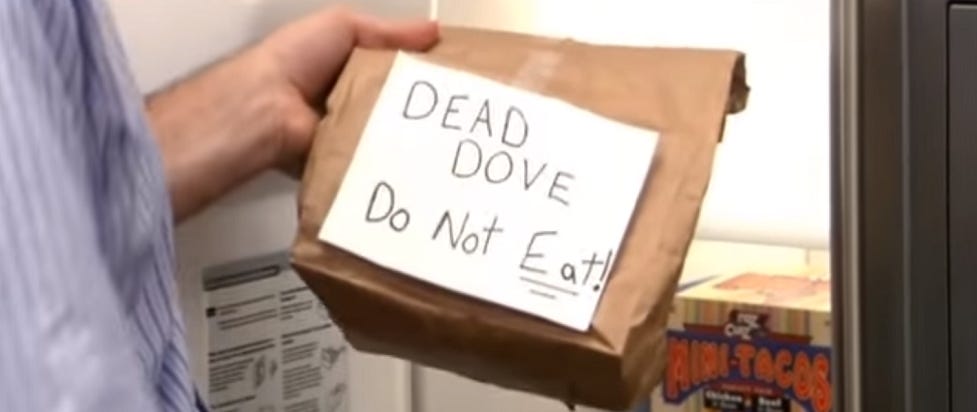
I once endured listening to a pasty, ginger, Scottish man – complete with dreadlocks and Jamaican patois – attempt reggae. I say this, not just because I experience occasional flashbacks, but also because I thought I’d seen it all. Turns out I was wrong as I never expected a central bank to contemplate hiking interest rates in response to a supply side shock.
If you’re reading this then you probably already know that the MPC voted to hold Bank Rate at its current level yesterday. This came as a surprise to nobody. Holding is a completely acceptable position to take given all the uncertainty. I myself almost voted for a hold on City AM’s Shadow MPC for that very reason. In the end I voted to cut as I believe any inflation stemming from the Iran Crisis will be transitory and because it’s a supply side shock there is nothing the Bank can do about it.
Moreover, I’m more concerned over weak demand which will likely be exacerbated by the crisis as more firms go bust and people lose their jobs. Monetary policy remains restrictive and the Bank should be aiming for a neutral rate of around three per cent by the end of the year.
However, what was surprising was the fact that it was a unanimous decision from the MPC. What is more, the accompanying release with the thoughts of the individual members was also quite hawkish. Even Swati Dhingra and Alan Taylor – who are seen as doves – sounded hawkish and didn’t seem to rule out hiking rates if the Strait of Hormuz is not reopened.
The result in the markets was as expected. Two-year gilt yields increased by 0.3 percentage points to 4.4 per cent (this is more dramatic than it sounds). 10-year yields increased by 0.11 percentage points up to 4.85 per cent (which is almost as high as in 2008). Investors were spooked and had priced in two rate hikes this year. Bailey was forced to give an interview on the radio where he was much more dovish and essentially said that the markets were wrong to interpret the MPC’s very hawkish statement as a very hawkish statement (silly investors).
The statement from the MPC was hawkish and it should be interpreted as such. This is, frankly, ludicrous. As discussed above and in more depth the other week, this is a supply side shock and there is absolutely nothing the Bank can do about it. Unless Bailey and the rest of the MPC decide to launch a daring military raid to reopen the Strait of Hormuz or if they find oil under Threadneedle Street, it is out of their hands. While there may be some second-order effects (which is what the Bank is concerned about) this is likely to be balanced out by very weak demand.
What is more, I’m also not convinced that some of these fears will even be realised. For example, the MPC seems to be particularly worried about the energy shock leading to an increase in wages. This would normally be a reasonable expectation and it is what happened in the aftermath of Covid. However, there is far more slack in the labour market than after the pandemic and we saw just yesterday that wage growth has stalled. As such, we should not expect to see increased upward pressure on wages.
We find ourselves in our current situation because the Bank has got itself in a panic. It has a credibility deficit stemming from its (in)action in 2021/22. The MPC didn’t want to risk the economic recovery as the world emerged from Covid and mistakenly interpreted increasing inflation as a supply side shock. It kept monetary policy too loose and allowed inflation to get out of control. It was behind the curve and raised rates too slowly. It then overcorrected by hiking rates too aggressively and keeping them high for too long.
The MPC clearly feels as though it needs to take a hawkish position in order to demonstrate that it won’t make the same mistakes again. It wants the world to know that it will be tough on inflation and tough on the causes of inflation and so that if there is even the slightest hint of an uptick it will take a very aggressive approach to stamp it out. The truly ironic – and tragic – thing is that in order to protect its reputation and cling to any remnant of credibility, it risks causing even more damage to the UK economy by hiking rates or signalling that it will.
It will be young people who suffer the most as a result. Youth unemployment is already unacceptably high and this has been exacerbated by the hike to Employers’ National Insurance, increases to the minimum wage, and the Employment Rights Act. If borrowing costs for firms increase (or if they think they will) then they will be even more reluctant to take a chance on hiring a young person – they might even have to start letting people go or find themselves going out of business.
It’s also bad news for the public finances. As discussed above, gilt yields have soared and this has increased the cost of borrowing for the government. It already spends a fortune servicing the National Debt and things look set to get even worse. I’ve written before on why there is a significant opportunity cost associated with this as it is money which cannot be spent on funding essential public services, providing room for tax cuts, or paying down the National Debt. The public finances are already unsustainable due to the Chancellor’s mismanagement of the economy and the Bank is going to make things worse.
I feel like a voice crying in the wilderness calling for a cut to interest rates and I accept that. I also appreciate the need for caution and so holding rates is a perfectly reasonable position. However, hiking rates or even talking about increases in the face of a supply side shock in an economy which is experiencing chronically low growth and high unemployment is highly inappropriate.
Thanks as ever for reading. It was a short one today as I’m using hospital WiFi. I might write something longer tomorrow on steel. Normal service should resume from next weekend.